
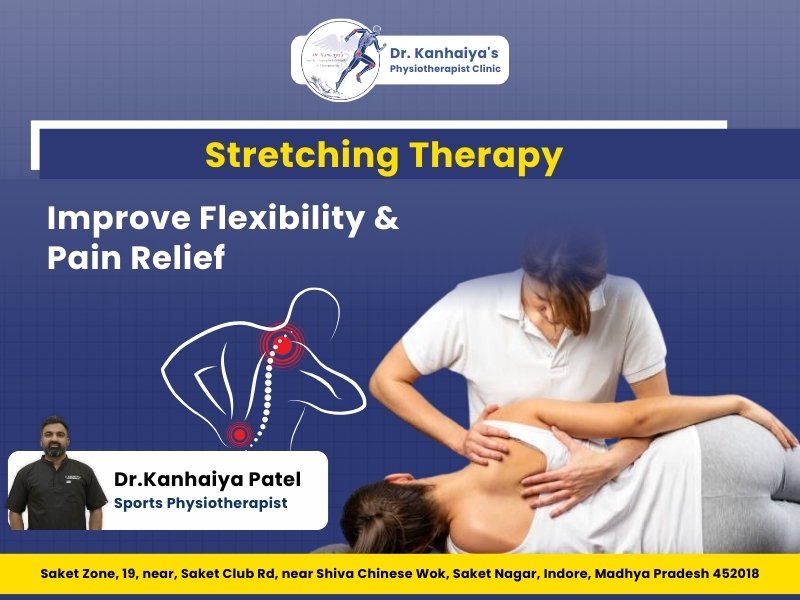
stretching physiotherapy in Indore – Improve Flexibility & Pain Relief at Dr. Kanhaiya’s Physiotherapist Clinic
In today’s fast-moving lifestyle, body stiffness and muscle pain have become very common. Because of long sitting hours, lack of movement, and stress, more than 70% of adults experience muscle tightness at least once a week. As a result, daily activities like walking, bending, or even sleeping comfortably become difficult. Therefore, stretching physiotherapy in Indore plays an important role in maintaining body flexibility and reducing pain. At Dr. Kanhaiya’s Physiotherapist Clinic in Indore, stretching therapy is designed to help people move freely, feel relaxed, and live pain-free lives. Who Needs Stretching Physiotherapy? Stretching therapy is not limited to athletes. In fact, people from all age groups benefit from stretching physiotherapy in Indore. Office Workers Because of long sitting hours, nearly 75% of office workers suffer from neck or lower back stiffness. Stretching therapy releases tight muscles and improves posture. Sports Persons and Athletes Athletes place repeated stress on muscles. Therefore, stretching reduces injury risk by almost 30% and improves performance. Elderly Individuals As age increases, muscles lose flexibility. However, stretching therapy improves joint movement and reduces fall risk. Post-Injury and Post-Surgery Patients After injury or surgery, muscles become stiff. Stretching helps regain normal movement faster. At a trusted physiotherapy clinic in Indore, Dr. Kanhaiya customizes stretching therapy for every patient. Why Stretching Therapy Is Important in Daily Life Most people ignore early signs of stiffness. However, stiffness slowly turns into chronic pain if left untreated. Therefore, stretching therapy becomes essential. According to health research, nearly 60% of back and neck pain cases occur due to muscle tightness. As a result, regular stretching helps prevent long-term problems. In addition, stretching: Keeps muscles healthy Improves body balance Reduces stress on joints Makes daily movements easier At Dr. Kanhaiya’s physiotherapy clinic in Indore, stretching sessions are planned according to age, pain level, and body condition. Stretching Therapy for Pain Relief Pain usually starts when muscles remain tight for a long time. Therefore, stretching helps release tension and relax muscles. Stretching physiotherapy in Indore effectively treats: Neck pain Shoulder stiffness Back pain Knee pain Muscle spasms Moreover, research shows that patients experience up to 50% pain reduction after regular stretching sessions. At Dr. Kanhaiya’s clinic near Saket Nagar, Indore, pain relief is achieved naturally—without medicine dependency. What Is Stretching Physiotherapy? Stretching physiotherapy is a therapeutic technique where a trained physiotherapist gently stretches muscles and joints to improve flexibility. Unlike random stretching at home, this therapy follows a planned and safe method. Moreover, studies show that regular guided stretching improves joint mobility by nearly 35–40% within a few weeks. Because of this, patients feel lighter and more active. At a professional physiotherapy clinic in Indore, stretching therapy: Improves muscle flexibility Reduces stiffness Enhances blood circulation Prevents muscle injuries Improves posture That is why many patients trust Dr. Kanhaiya, known as the best physiotherapist in Indore, for safe stretching therapy. Stretching Therapy for Athletes and Fitness Lovers As a sports physiotherapist since 2013, Dr. Kanhaiya understands athletic body mechanics deeply. Therefore, stretching therapy becomes a core part of sports rehabilitation. Benefits for Athletes Faster muscle recovery Improved flexibility Reduced muscle fatigue Lower injury risk As a result, athletes prefer consulting the best physiotherapist in Indore for long-term performance improvement. Types of Stretching Used in Physiotherapy At a professional physiotherapy clinic in Indore, different stretching methods are used based on the condition. Passive Stretching Here, the therapist stretches the muscle while the patient relaxes. Active Stretching The patient stretches muscles using their own strength. Dynamic Stretching This involves controlled movements that prepare muscles for activity. PNF Stretching This advanced technique improves flexibility faster and safely. Therefore, stretching physiotherapy in Indore is both scientific and personalized. Stretching Therapy for Office-Related Pain Because desk jobs limit movement, stiffness develops quickly. However, stretching therapy corrects muscle imbalance. At Dr. Kanhaiya’s physiotherapy clinic in Indore, office workers receive: Neck and shoulder stretches Spine mobility exercises Hip and leg flexibility training As a result, posture improves and work-related pain reduces significantly. Stretching Therapy for Elderly Patients With age, joints become stiff. However, regular stretching helps maintain independence. Benefits include: Improved walking stability Reduced joint pain Better daily movement Under the care of the best physiotherapist in Indore, elderly patients stretch safely and comfortably. Why Choose Dr. Kanhaiya for Stretching Physiotherapy in Indore? Choosing the right physiotherapist ensures safety and results. Reasons Patients Trust Dr. Kanhaiya Sports physiotherapist since 2013 Evidence-based treatment approach Personalized care plans Modern rehabilitation techniques Located near Saket Nagar, Indore, the clinic is easily accessible. Stretching Therapy at a Trusted Physiotherapy Clinic in Indore A proper clinic ensures correct posture and timing. Therefore, expert supervision matters. At Dr. Kanhaiya’s physiotherapy clinic in Indore, each session is monitored carefully to prevent injury and ensure results. Patients from Saket Nagar, Vijay Nagar, Palasia, and nearby areas regularly visit for stretching physiotherapy. How Many Stretching Sessions Are Needed? The number of sessions depends on: Age Severity of stiffness Activity level Pain condition However, most patients notice improvement within 5–7 sessions of stretching physiotherapy in Indore. Is Stretching Therapy Safe? Yes, stretching therapy is very safe when done correctly. In fact, professionally guided stretching reduces injury risk by 40%. Therefore, consulting the best physiotherapist in Indore is always recommended. Long-Term Benefits of Stretching Physiotherapy Stretching is not just a short-term solution. Instead, it supports long-term health. Regular stretching: Maintains flexibility Prevents stiffness Improves posture Enhances quality of life Patients also receive simple home exercises from Dr. Kanhaiya. Frequently Asked Questions (FAQs) 1. What is stretching physiotherapy in Indore and how does it help? Stretching physiotherapy in Indore focuses on gently lengthening tight muscles and improving joint mobility under expert supervision. As a result, pain reduces, flexibility improves, and daily movements become easier. At a professional physiotherapy clinic in Indore, stretching therapy also helps prevent future injuries and long-term stiffness. 2. Who should consider stretching physiotherapy treatment? Stretching physiotherapy in Indore is helpful for office workers, athletes, elderly individuals, and people recovering from injuries. Because muscle stiffness affects nearly 70% of adults, guided