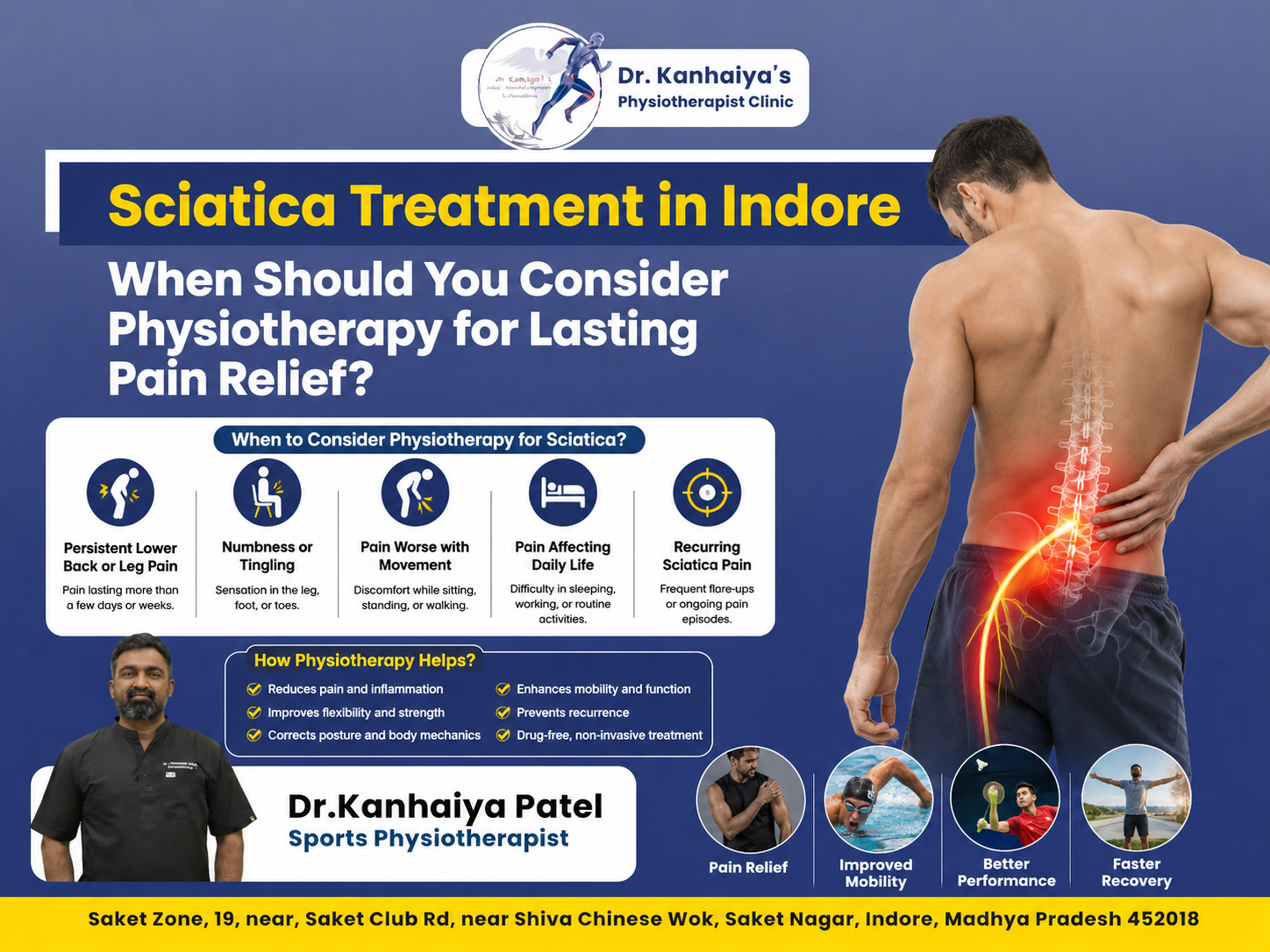
Sciatica Treatment in Indore is one of the most effective non-surgical approaches for relieving pain caused by irritation or compression of the sciatic nerve. Sciatica can affect people of all age groups and often makes simple daily activities such as walking, sitting, bending, standing for long periods, or even sleeping uncomfortable. The pain usually begins in the lower back and travels through the buttock, thigh, and down the leg. While mild symptoms may improve with rest and activity modification, persistent or severe pain often indicates an underlying spinal or muscular condition that requires professional evaluation. Early Physiotherapy for Sciatica in Indore helps relieve pain, improve mobility, restore normal function, and reduce the risk of long-term complications.
Sciatica is not a disease but a symptom of an underlying condition affecting the sciatic nerve, the longest nerve in the human body. Problems such as a herniated disc, spinal stenosis, piriformis syndrome, muscle tightness, or degenerative spine disorders can place pressure on the sciatic nerve, causing pain, numbness, tingling, or weakness in the affected leg. Fortunately, with timely diagnosis and evidence-based Back Pain Physiotherapy in Indore, many individuals recover successfully without surgery and return to their normal lifestyle.
Dr. Kanhaiya, an experienced Sports Physiotherapist in Indore, has been helping patients recover from sports injuries, spine disorders, and musculoskeletal conditions since 2013. Using advanced rehabilitation techniques, biomechanical assessment, and individualized physiotherapy programs, he develops customized treatment plans that reduce pain, restore movement, strengthen supporting muscles, and help prevent future injuries. His patient-centred approach has made him a trusted choice for Sciatica Treatment in Indore among athletes, office workers, senior citizens, and individuals experiencing chronic back pain.
What Is Sciatica? Understanding Sciatica Treatment in Indore
Sciatica refers to pain caused by irritation, inflammation, or compression of the sciatic nerve. This nerve originates in the lower spine, passes through the buttocks, and extends down the back of each leg to the feet. Since it is the largest nerve in the body, irritation anywhere along its pathway can result in pain that radiates from the lower back into the leg.
Unlike ordinary lower back pain, sciatica usually affects only one side of the body. The severity of symptoms varies from mild discomfort to severe pain that interferes with work, exercise, and routine activities. Seeking early Sciatica Treatment in Indore helps identify the underlying cause and allows patients to begin the most appropriate rehabilitation program before symptoms worsen.
What Causes Sciatica?
Sciatica develops when the sciatic nerve becomes compressed, irritated, or inflamed. Several spinal and muscular conditions can contribute to this problem.
Can a Herniated Disc Cause Sciatica?
Yes. A herniated or slipped disc is one of the most common causes of sciatica. When the soft inner portion of a spinal disc protrudes through its outer layer, it may press against the sciatic nerve, resulting in pain, tingling, numbness, or weakness that travels down the leg.
Can Spinal Stenosis Lead to Sciatic Nerve Pain?
Yes. Spinal stenosis occurs when the spinal canal narrows, reducing the space available for the nerves. Compression of the sciatic nerve due to spinal stenosis may cause pain, numbness, and difficulty walking, particularly in older adults.
Can Piriformis Syndrome Trigger Sciatica?
Yes. The piriformis muscle is located deep within the buttock. If this muscle becomes tight, inflamed, or goes into spasm, it can compress the sciatic nerve and produce symptoms similar to sciatica.
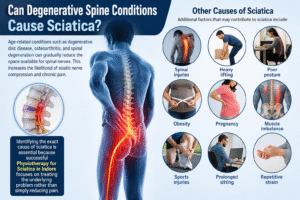
Can Degenerative Spine Conditions Cause Sciatica?
Age-related conditions such as degenerative disc disease, osteoarthritis, and spinal degeneration can gradually reduce the space available for spinal nerves. This increases the likelihood of sciatic nerve compression and chronic pain.
Other Causes of Sciatica
Additional factors that may contribute to sciatica include:
- Spinal injuries
- Heavy lifting
- Poor posture
- Obesity
- Pregnancy
- Muscle imbalance
- Sports injuries
- Prolonged sitting
- Repetitive strain
Identifying the exact cause of sciatica is essential because successful Physiotherapy for Sciatica in Indore focuses on treating the underlying problem rather than simply reducing pain.
What Are the Common Symptoms of Sciatica?
The symptoms of sciatica vary depending on the severity of nerve compression and the underlying cause. Some individuals experience mild discomfort, while others develop severe pain that limits daily activities.
Common symptoms include:
- Sharp pain radiating from the lower back into the leg
- Burning sensation in the buttock or thigh
- Tingling or pins-and-needles sensation
- Numbness in the leg or foot
- Muscle weakness
- Pain while sitting
- Difficulty standing for long periods
- Pain during walking
- Reduced flexibility
- Difficulty climbing stairs
If these symptoms continue or become more severe, professional Sciatica Treatment in Indore should be considered to prevent further nerve irritation and improve recovery.
How Is Sciatica Different From Ordinary Back Pain?
Many people believe that every episode of lower back pain is sciatica, but these conditions are different.
Ordinary Lower Back Pain
Ordinary back pain usually remains limited to the lower back and is commonly caused by muscle strain, poor posture, ligament injury, or minor spinal problems. It generally does not extend into the leg.
Sciatica
Sciatica typically causes pain that starts in the lower back and radiates through the buttock, thigh, calf, and sometimes into the foot. It occurs because of irritation or compression of the sciatic nerve and may also be associated with numbness, tingling, or muscle weakness.
If lower back pain travels below the knee or is accompanied by weakness or numbness, it is important to seek medical evaluation to determine whether sciatica is the underlying cause.
When Should You Consider Physiotherapy for Sciatica in Indore?
Early physiotherapy often prevents symptoms from becoming chronic and helps restore normal movement more effectively. Seeking timely Physiotherapy for Sciatica in Indore allows the underlying cause to be addressed before significant nerve damage develops.
You should consider physiotherapy if:
- Pain lasts longer than one to two weeks
- The pain keeps returning
- Walking becomes difficult
- Sitting for long periods increases discomfort
- Pain radiates below the knee
- Numbness or tingling develops
- Muscle weakness affects daily activities
- Home remedies are not providing relief
Receiving early Sciatica Treatment in Indore enables physiotherapists to reduce nerve irritation, improve spinal mobility, strengthen supporting muscles, and restore normal function through a personalized rehabilitation program.
Can Physiotherapy Help Treat Sciatica Without Surgery?
In many cases, yes. Physiotherapy for Sciatica in Indore is considered one of the most effective conservative treatment options and is often recommended before surgery unless there is severe nerve compression or a medical emergency. Physiotherapy focuses on treating the underlying cause of sciatic nerve irritation rather than simply masking the pain with medication.
The primary goals of Back Pain Physiotherapy in Indore include:
- Reducing pain and inflammation
- Improving flexibility
- Restoring normal movement
- Strengthening the core and back muscles
- Correcting posture
- Improving balance and coordination
- Preventing future episodes
- Helping patients safely return to work and daily activities
With a structured rehabilitation program and regular follow-up, many individuals experience significant improvement in symptoms and quality of life without requiring surgery.
How Does a Physiotherapist Diagnose Sciatica?
Before starting treatment, a physiotherapist performs a detailed assessment to identify the source of pain and evaluate movement limitations. This comprehensive evaluation helps create a personalized rehabilitation plan.
Medical History
The physiotherapist gathers information about:
- Present symptoms
- Duration of pain
- Previous injuries
- Lifestyle and occupation
- Physical activity level
- Medical history
Understanding these factors helps identify possible causes of sciatic nerve irritation.
Physical Examination
A detailed physical examination includes assessing:
- Posture
- Spinal mobility
- Muscle strength
- Flexibility
- Walking pattern (gait)
- Functional movements
This examination helps determine how the condition affects daily activities.
Neurological Assessment
Since sciatica involves nerve irritation, neurological testing is essential. The physiotherapist evaluates:
- Muscle power
- Reflexes
- Sensation
- Nerve function
These findings help assess the severity of nerve involvement.
Special Clinical Tests
Specific clinical tests, such as the Straight Leg Raise Test, are commonly performed to identify sciatic nerve irritation and confirm the diagnosis.
If necessary, imaging investigations such as MRI or X-rays may be recommended in consultation with an orthopedic or spine specialist to identify the exact cause of nerve compression.
How Does Physiotherapy Help Treat Sciatica?
Physiotherapy for Sciatica in Indore focuses on treating the underlying cause of nerve irritation instead of simply relieving symptoms. A personalized rehabilitation program helps reduce pressure on the sciatic nerve, restore spinal mobility, improve flexibility, strengthen supporting muscles, and promote long-term recovery.
The treatment plan varies depending on:
- Cause of sciatica
- Severity of symptoms
- Age
- Physical activity level
- Overall health
- Lifestyle requirements
With timely intervention, many patients recover successfully and return to normal daily activities without surgery.
What Physiotherapy Treatments Are Used for Sciatica?
An experienced physiotherapist develops an individualized treatment program after thoroughly assessing the patient’s condition.
Pain Management Techniques
The initial stage of treatment focuses on reducing pain and inflammation.
Common techniques include:
- Manual therapy
- Soft tissue mobilization
- Joint mobilization
- Heat therapy
- Cold therapy
- Electrotherapy (when appropriate)
These techniques help relax tight muscles, reduce stiffness, improve circulation, and decrease pressure on the sciatic nerve.
Stretching Exercises
Gentle stretching exercises improve flexibility and reduce muscle tightness around the lower back, hips, and legs.
Common stretches include:
- Piriformis stretch
- Hamstring stretch
- Hip flexor stretch
- Lower back mobility exercises
These exercises should initially be performed under the supervision of an experienced physiotherapist to ensure correct technique and prevent further injury.
Strengthening Exercises
Weak core and back muscles often contribute to recurring lower back pain and sciatica.
A rehabilitation program may include strengthening exercises for:
- Core muscles
- Lower back muscles
- Gluteal muscles
- Hip muscles
- Pelvic stabilizing muscles
Improving the strength of these muscle groups provides better spinal support and reduces pressure on the sciatic nerve.
Posture Correction
Poor posture is one of the common factors that can worsen sciatica symptoms.
During Back Pain Physiotherapy in Indore, patients learn:
- Correct sitting posture
- Proper standing posture
- Safe lifting techniques
- Correct bending movements
- Workplace ergonomics
- Spine protection strategies
These posture modifications help reduce unnecessary stress on the lower back during everyday activities.
Functional Rehabilitation
Once pain begins to improve, physiotherapy shifts its focus toward restoring normal movement and helping patients safely return to daily life.
Functional rehabilitation may include:
- Walking training
- Balance exercises
- Stair-climbing practice
- Sports-specific rehabilitation
- Activity modification
The objective is to improve confidence, mobility, and overall physical function while minimizing the risk of future injuries.
How Long Does Recovery From Sciatica Take?
Recovery from sciatica varies depending on the underlying cause, severity of nerve compression, and how early treatment begins.
Many patients notice improvement within a few weeks of starting Physiotherapy for Sciatica in Indore, while chronic or severe cases may require a longer rehabilitation program.
Recovery is influenced by several factors, including:
- Cause of nerve compression
- Duration of symptoms
- Age
- Overall health
- Consistency with prescribed exercises
- Lifestyle habits
Following the physiotherapist’s advice, attending regular treatment sessions, and performing home exercises consistently play an important role in achieving long-term recovery and preventing recurrence.
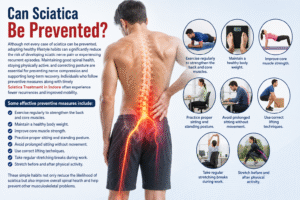
Can Sciatica Be Prevented?
Although not every case of sciatica can be prevented, adopting healthy lifestyle habits can significantly reduce the risk of developing sciatic nerve pain or experiencing recurrent episodes. Maintaining good spinal health, staying physically active, and correcting posture are essential for preventing nerve compression and supporting long-term recovery. Individuals who follow preventive measures along with timely Sciatica Treatment in Indore often experience fewer recurrences and improved mobility.
Some effective preventive measures include:
- Exercise regularly to strengthen the back and core muscles.
- Maintain a healthy body weight.
- Improve core muscle strength.
- Practice proper sitting and standing posture.
- Avoid prolonged sitting without movement.
- Use correct lifting techniques.
- Take regular stretching breaks during work.
- Stretch before and after physical activity.
These simple habits not only reduce the likelihood of sciatica but also improve overall spinal health and help prevent other musculoskeletal problems.
When Should You See a Physiotherapist Immediately for Sciatica?
While mild lower back pain may improve with rest, some symptoms require prompt professional evaluation. Early Sciatica Treatment in Indore helps prevent prolonged nerve irritation, reduces pain, and speeds up recovery.
You should consult a physiotherapist immediately if you experience:
- Pain lasting more than two weeks
- Severe pain radiating below the knee
- Persistent numbness or tingling
- Weakness in the leg or foot
- Difficulty walking
- Recurrent episodes of sciatica
- Pain affecting sleep or daily activities
- Symptoms that do not improve with home remedies
Seeking professional care at the right time allows the underlying cause to be identified and treated before the condition becomes chronic.
Why Choose Dr. Kanhaiya for Sciatica Treatment in Indore?
Successful treatment of sciatica involves much more than temporary pain relief. It requires identifying the root cause of nerve compression and designing a rehabilitation program that restores normal movement while preventing future episodes.
Dr. Kanhaiya is an experienced Sports Physiotherapist in Indore with more than a decade of experience in sports rehabilitation, musculoskeletal physiotherapy, and spine-related conditions. Since 2013, he has helped athletes, office professionals, senior citizens, and individuals with chronic back pain recover through evidence-based physiotherapy and personalized rehabilitation programs.
His professional experience includes working with:
- Daly College, Indore
- Sajid Lodi Tennis Academy
- Indian Navy Tennis Team
- Former Physiotherapist, Madhya Pradesh Cricket Association (MPCA)
- Davis Cup
Patients choose Dr. Kanhaiya because of:
- More than 10 years of clinical experience
- Advanced rehabilitation equipment
- Personalized one-to-one physiotherapy sessions
- Customized home exercise programs
- Patient-focused treatment approach
- Honest guidance throughout recovery
- Comfortable and hygienic treatment environment
Every rehabilitation plan is tailored according to the patient’s symptoms, physical condition, lifestyle, and recovery goals to ensure safe, effective, and long-lasting results.
Why Is Personalized Physiotherapy Important for Sciatica?
No two patients experience sciatica in the same way. The location of pain, degree of nerve compression, daily activities, fitness level, and overall health vary from person to person. Therefore, individualized treatment plays a crucial role in successful recovery.
A personalized Physiotherapy for Sciatica in Indore program helps:
- Identify the exact source of pain
- Target affected muscles and joints
- Improve flexibility safely
- Restore normal movement patterns
- Reduce the risk of recurrence
- Promote faster and long-lasting recovery
This individualized approach is one of the key reasons why many patients seek treatment from an experienced Best Physiotherapist in Indore.
Frequently Asked Questions About Sciatica Treatment in Indore
1. What is sciatica?
Sciatica is pain caused by irritation, inflammation, or compression of the sciatic nerve. The pain usually begins in the lower back and radiates through the buttock into one leg.
2. When should I consider Physiotherapy for Sciatica in Indore?
You should consider physiotherapy if pain lasts longer than one to two weeks, radiates down the leg, causes numbness or weakness, or interferes with work, walking, or daily activities.
3. Can physiotherapy cure sciatica?
Physiotherapy helps treat the underlying cause of sciatica in many patients by reducing nerve irritation, improving flexibility, strengthening muscles, and restoring normal movement. Recovery depends on the severity and cause of the condition.
4. How long does recovery from sciatica take?
Recovery varies from person to person. Some patients improve within a few weeks, while chronic or severe cases may require a longer rehabilitation program.
5. What exercises are recommended for sciatica?
Common exercises include gentle stretching, piriformis stretches, hamstring stretches, core strengthening exercises, pelvic stability training, and mobility exercises. These should be performed under the supervision of a qualified physiotherapist.
6. Can athletes develop sciatica?
Yes. Athletes may develop sciatica because of repetitive movements, muscle imbalances, overuse injuries, or spinal disorders. Early physiotherapy helps improve recovery and supports a safe return to sports.
7. Is surgery always necessary for sciatica?
No. Most individuals recover with conservative treatment such as Physiotherapy for Sciatica in Indore, activity modification, posture correction, and structured exercise programs. Surgery is generally reserved for severe cases involving significant nerve compression.
8. How can I prevent sciatica from coming back?
Maintaining a healthy weight, strengthening your core muscles, practicing correct posture, avoiding prolonged sitting, exercising regularly, and following your physiotherapist’s advice can reduce the risk of recurrence.
9. When should I seek immediate medical attention for sciatica?
You should seek prompt evaluation if you experience severe leg weakness, persistent numbness, worsening pain, difficulty walking, or symptoms that do not improve despite home care and physiotherapy.
10. Why choose Dr. Kanhaiya for Sciatica Treatment in Indore?
With over 10 years of experience in sports rehabilitation and musculoskeletal physiotherapy, Dr. Kanhaiya provides personalized rehabilitation programs, advanced physiotherapy techniques, and patient-centred care to help individuals recover safely, regain mobility, and return to an active lifestyle.
Conclusion: Sciatica Treatment in Indore for Safe Recovery and Better Mobility
Sciatica Treatment in Indore plays an important role in relieving pain, restoring mobility, and improving overall quality of life. Since sciatica is usually caused by irritation or compression of the sciatic nerve, identifying the underlying cause and beginning treatment early can help prevent chronic pain and long-term complications. Through evidence-based Physiotherapy for Sciatica in Indore, many individuals can recover successfully without surgery while improving strength, flexibility, posture, and spinal function.
If lower back pain, leg pain, numbness, or weakness continues to affect your daily routine, seeking professional care at the right time can make a significant difference. Dr. Kanhaiya, an experienced Sports Physiotherapist in Indore, offers personalized rehabilitation programs that focus on pain relief, functional recovery, injury prevention, and long-term spine health. With a structured physiotherapy plan and consistent rehabilitation, patients can safely return to work, sports, and everyday activities while reducing the risk of future episodes of sciatica.